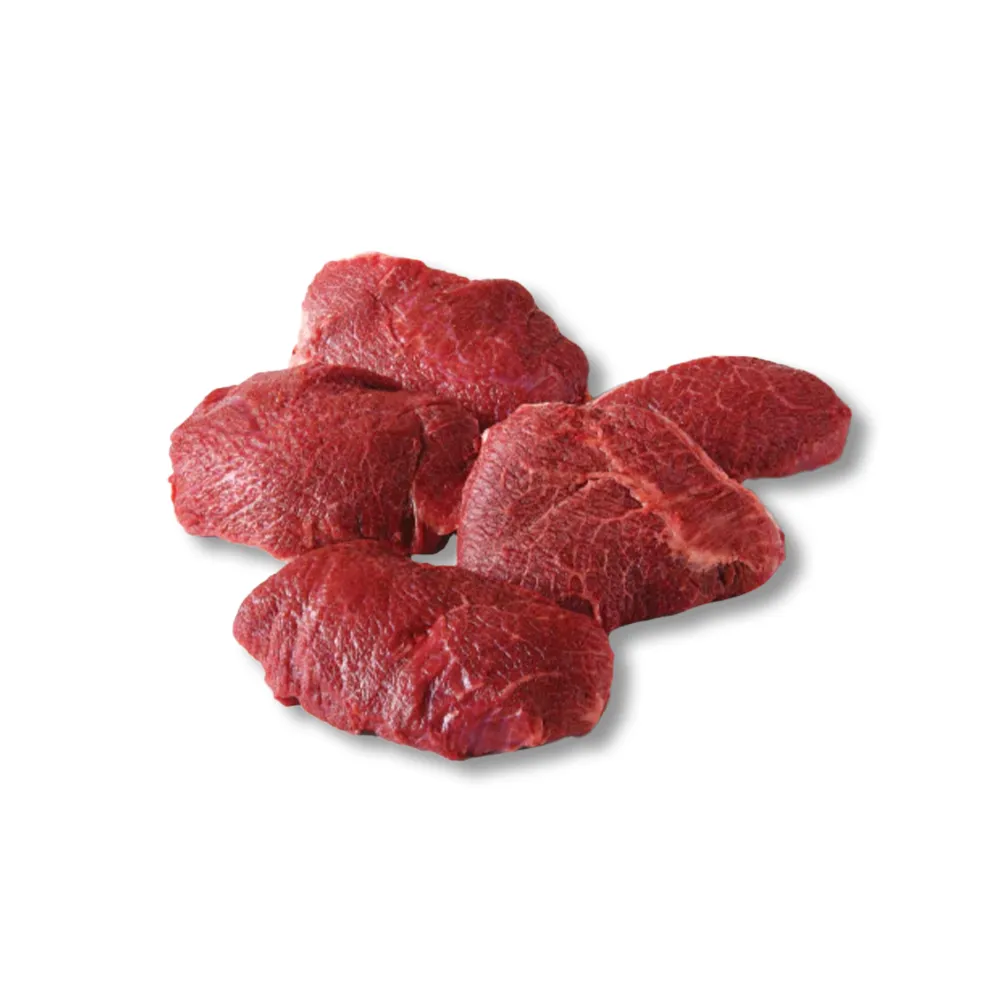
Halal Frozen Beef Cheeks (Linamen Removed)
Product description
Gourmet restaurants, foodservice distributors, and meat processors sourcing a halal frozen beef cheek supplier work with France AJ Alimentaire And Food Export And Import LTDA for frozen beef cheek bulk supply drawn from Brazil, the Netherlands, South Africa, and Argentina. Multi-origin sourcing means a single seasonal gap in one country rarely interrupts a recurring foodservice or processing programme. Share your trim, weight, and volume requirements and our trade desk will come back with current indicative CIF or FOB pricing to your destination port.
Product Overview & Key Specifications
Halal frozen beef cheek is a boneless muscle cut trimmed of the linamen (silver skin), glandular tissue, and excess fat, supplied whole per piece for slow cooking, braising, and stewing applications. Figures in the table are commercial reference points for a typical export lot rather than a binding specification; the applicable parameters for any given contract are set out in the seller’s formal offer and confirmed on the shipment’s Certificate of Analysis and inspection report.
| Parameter | Commercial Reference Value |
|---|---|
| Origin | Brazil, Netherlands, South Africa, Argentina |
| Product Type | Frozen Beef Cheek, linamen removed (Bos taurus) |
| Grade | Grade A commercial reference classification, trimmed, no glandular tissue |
| Piece Weight | 1.5 kg – 2.5 kg per piece |
| Freezing Process | Blast frozen (BQF) at -40°C |
| Storage Temperature | -18°C or lower |
| Shelf Life | Up to 24 months from production date, confirmed on the Certificate of Analysis |
| Packaging | Vacuum-sealed or block-frozen export cartons as standard, alternative packaging on customer request |
| Container Loading | 24 – 27 MT per 40ft HC reefer container |
| Minimum Order Quantity (MOQ) | 5 containers and up (approximately 120 – 135 MT) |
| Certifications & Inspection | Sourced from facilities operating under internationally recognized standards, including HACCP and ISO 22000 where applicable; Halal Certificate, Veterinary Health Certificate, and SGS or equivalent pre-shipment inspection available on request, depending on origin, producer, and shipment |
What Is Beef Cheek Used For?
Beef cheek is a well-worked facial muscle that breaks down into a tender, gelatin-rich texture under long, low-temperature cooking, making it a preferred cut for braising, birria, barbacoa, and slow-cooked stews rather than quick grilling formats. Buyers comparing halal beef cheek trimmed vs untrimmed should note that a trimmed cut has the linamen (silver skin), glandular tissue, and excess surface fat removed, giving a kitchen or processor a consistent, ready-to-cook piece rather than one requiring further prep before use.
Global Demand & Market Trends
Demand for a wholesale halal beef cheek supply line comes from gourmet restaurants, foodservice distributors, and processors producing braised dishes, birria, and slow-cooked stews rather than fast-turnaround retail cuts. Halal frozen beef cheek price per ton is not fixed or published — it moves with the world market and is confirmed per RFQ against destination port, quantity, packaging, freight, and prevailing conditions at the time of enquiry. Supply positions spanning a halal beef cheek exporter Brazil position alongside sourcing in the Netherlands, South Africa, and Argentina let buyers keep a supply programme running through a single origin’s seasonal or logistical disruption.
Culinary & Industrial Applications
- Beef cheek for slow cooking and long-braise restaurant menus
- Beef cheek for birria and barbacoa preparation
- Beef cheek for foodservice and HoReCa distribution
- Feedstock for industrial stewing and ready-meal manufacturing
Why Source Halal Frozen Beef Cheek from France AJ Alimentaire And Food Export And Import LTDA
- Authentic Product Quality: Cheeks are trimmed of linamen, glandular tissue, and excess fat to Grade A commercial reference parameters before any offer is issued.
- Pricing Tied to the Live Market: Every CIF and FOB figure our desk quotes is pulled from current world market conditions at the moment of your enquiry, not a rate card that sat unchanged for months.
- Flexible Order Quantities: Programmes start at 5 containers (approximately 120–135 MT) and scale upward for recurring monthly or contract volumes as a buyer’s foodservice or processing demand grows.
- Reefer Lanes Across Four Origins: Container capacity booked out of Brazil, the Netherlands, South Africa, and Argentina gives an FOB or CIF shipment a standby origin to draw on if one position slips.
- Inspection Before Every Load-Out: Cheeks leave the freezer at -40°C, stay at -18°C or below through storage and transit, and clear an SGS or equivalent inspection body before any container is sealed.
Trade Terms
| Term | Detail |
|---|---|
| Incoterms | FOB / CIF – destination port |
| Pricing | Quoted per RFQ, not published as a fixed rate — subject to destination port, quantity, packaging, freight and market conditions, confirmed by the seller before contract |
| Payment Terms | LC / DLC / SBLC (based on customer request) |
| Minimum Order Quantity | 5 containers and up (approximately 120 – 135 MT) |
| Origins | Brazil, Netherlands, South Africa, Argentina |
| Packaging | Vacuum-sealed or block-frozen export cartons, or on customer request |
Packaging & Container Loading
Cheeks leave the plant either vacuum-sealed by the piece or block-frozen into export cartons, and a kitchen or processing line that runs a different case format can arrange an alternative at RFQ stage. Loading works out to roughly 24–27 MT in a 20ft or 40ft HC reefer, so the 5-container minimum sits at around 120–135 MT for a typical shipment. Cold-chain integrity runs unbroken from the -40°C blast freeze through -18°C storage and into the reefer for transit.
Step-by-Step Ordering & Inquiry Process
- Open with an RFQ or ICPO covering trim level, piece weight, destination port, and the container count you want priced.
- Our desk works up a soft offer with indicative CIF/FOB figures and a lead time for the origin you named.
- Put it on your letterhead as an ICPO once the numbers work for your programme.
- Sign off on the sales contract that captures the terms both sides agreed to.
- Choose your payment route — LC, DLC, or SBLC — for the shipment in question.
- Production runs while SGS or an equivalent body inspects the cargo ahead of loading.
- Your shipment and its paperwork land once loading and inspection are both signed off.
Shipment, Inspection & Documentation
Reefer containers move on FOB or CIF terms, and SGS or an equivalent body signs off on the cargo before it leaves the port. A shipment’s paperwork typically runs to a commercial invoice, packing list, certificate of origin, bill of lading, and a veterinary health certificate, with a phytosanitary certificate added where the destination calls for one; a Halal Certificate follows on request, its availability tied to origin, producer, and the specific shipment. The final list of certificates is set once the contract is signed, since it tracks the product, origin, producer, and destination together.
Request Pricing
Halal frozen beef cheek doesn’t carry a published price list — each figure comes back through an RFQ, priced against the world market as it stands on the day you ask. Send over your specification, destination port, and target volume, and our desk will follow up with an indicative CIF/FOB number. Contact Our Sales Team to open your B2B quote request.
Request Options
Selected: Carton · 10 kg · 20ft Container × 5 container(s)
Tags
Frequently Asked Questions
What is halal frozen beef cheek used for?
Beef cheek is a well-worked muscle that breaks down into a tender, gelatin-rich texture under long, low-temperature cooking, making it a preferred cut for braising, birria, barbacoa, and slow-cooked stews. France AJ supplies it trimmed of linamen, sourced from Brazil, the Netherlands, South Africa, and Argentina.
Is the beef cheek halal certified?
A Halal Certificate is available on request, depending on origin, producer, and shipment. Product is sourced from facilities operating under internationally recognized standards including HACCP and ISO 22000 where applicable, with SGS or equivalent pre-shipment inspection also available on request.
What is the minimum order quantity for beef cheek export?
Standard bulk supply is structured from a 5-container minimum order quantity, equivalent to approximately 120-135 MT based on standard reefer container loading. Buyers with different volume requirements can raise this at RFQ stage.
How is beef cheek packaged for export?
Standard export packaging is vacuum-sealed or block-frozen export cartons, with alternative packaging available on customer request. A 20ft or 40ft HC reefer container typically loads 24-27 MT.
Is beef cheek trimmed or untrimmed?
France AJ supplies beef cheek with the linamen (silver skin), glandular tissue, and excess surface fat trimmed as standard, giving a kitchen or processor a consistent, ready-to-cook piece rather than one requiring further prep before use.
How do I import halal frozen beef cheek from Brazil, the Netherlands, South Africa, or Argentina?
The process follows RFQ or ICPO, soft offer with indicative CIF/FOB pricing, sales contract, payment via LC/DLC/SBLC, production with SGS or equivalent pre-shipment inspection, then shipment with full export documentation. Requirements vary by destination and are confirmed at contract stage.