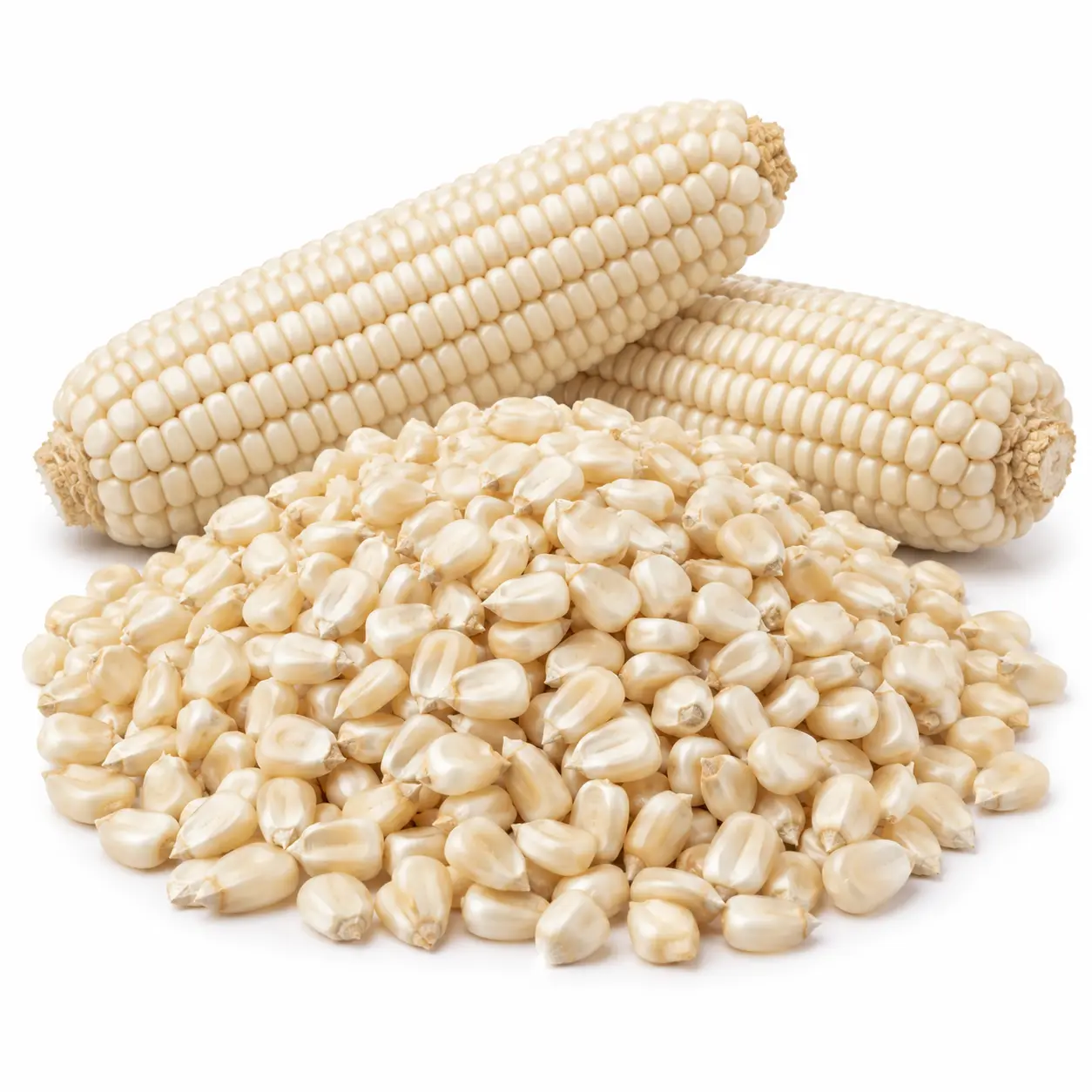
GMO White Animal Feed Corn
Product description
Compound feed mills and bulk importers looking for a GMO white maize supplier work with France AJ Alimentaire And Food Export And Import LTDA as a GMO white maize exporter sourcing across Brazil, India, and Argentina. Because this grade carries no non-GMO segregation requirement, origins can be pooled more freely across the three positions, which is often the reason buyers move from a single-country contract to a bulk GMO white maize wholesale supplier relationship once their feed programme scales past occasional container orders. Send a formal enquiry and our trade desk will return current CIF/FOB indicative pricing for your destination port.
Product Overview & Key Specifications
Buyers sourcing a white maize animal feed supplier for compound feed use typically size a shipment against moisture, protein, and aflatoxin tolerances rather than colour alone — white and yellow maize perform comparably once those parameters are met. The reference offering below is graded Grade 1 on a commercial basis; treat every figure as indicative — the seller’s official offer, Certificate of Analysis, and shipment inspection report set the specifications that apply to a given contract.
| Parameter | Commercial Reference Value |
|---|---|
| Origin | Brazil, India, Argentina |
| Product Type | White Maize for Animal Feed, GMO (Zea mays) |
| Grade | Grade 1 (Feed Grade) |
| Moisture Content | 14% max |
| Protein Content | 8% min |
| Foreign Matter | 2% max |
| Broken Kernels | 5% max |
| Heat-Damaged Kernels | 0.5% max |
| Aflatoxin | 20 ppb max |
| Test Weight | 68 kg/hl min |
| Packaging | 25 kg – 50 kg bags as standard, alternative formats on customer request |
| Minimum Order Quantity (MOQ) | 12,500 MT and up |
| Certifications & Inspection | Producer network operates under internationally recognized standards, including ISO 9001, HACCP and GMP where applicable; SGS or equivalent inspection, Certificate of Analysis, and GMO status declaration available on request |
Global Demand & Market Trends
Interest in a GMO white maize exporter relationship tends to come from compound feed mills and blenders that do not need non-GMO segregation and are instead prioritising volume, consistency, and origin flexibility over label status. White maize feed price per ton is not fixed or advertised — it moves with the world market and is confirmed per RFQ against destination port, quantity, packaging, freight, and prevailing conditions at the time of enquiry. With supply positions across white maize bulk exporter Brazil, GMO white maize exporter Argentina, and white maize exporter India, buyers building a compound feed programme can usually keep a contract running through one origin's harvest gap by drawing on another.
Can White Maize Be Used as Animal Feed?
White maize is used as animal feed in the same way yellow maize is; the question of white maize vs yellow maize for animal feed comes down to local availability and buyer preference rather than a fixed nutritional rule, since energy and starch content are broadly comparable once moisture and quality parameters are met. Where a distinction matters more is feed grade vs food grade white maize: feed grade is screened and priced for compound feed and blending use, while food grade is cleaned and tested against tighter parameters for human-consumption processing such as milling or nixtamalization.
Feed & Industrial Applications
- Compound feed mill formulation and blending
- Poultry feed for broiler and layer operations
- Cattle and general livestock feed programmes
- Bulk feed-grade milling and starch-related industrial use
Why Source GMO White Animal Feed Corn from France AJ Alimentaire And Food Export And Import LTDA
- Product Quality Confirmed Before Contract: Grain is drawn from producer networks in Brazil, India, and Argentina and screened to Grade 1 commercial reference parameters ahead of any offer being issued.
- Pricing Set by RFQ, Not a List: Every CIF/FOB quotation reflects current world market conditions, quantity, and destination at the time of the enquiry, rather than a published rate that can lag the market.
- Order Volumes That Scale With the Contract: Programmes start at 12,500 MT and extend to 25,000 MT, 50,000 MT, and 100,000 MT+, so growing compound feed demand does not require sourcing from a second supplier.
- Shipping Built Around Three Origins: Established FOB/CIF lanes out of Brazil, India, and Argentina support container and bulk-vessel shipments and give buyers a fallback route if one origin is delayed.
- Inspection Ahead of Loading: SGS or an equivalent inspection body coordinates pre-shipment checks and documentation, with Certificate of Analysis issued on request before the vessel departs.
Trade Terms
| Term | Detail |
|---|---|
| Incoterms | FOB / CIF – destination port |
| Pricing | Quoted per RFQ, not published as a fixed rate — subject to destination port, quantity, packaging, freight and market conditions, confirmed by the seller before contract |
| Payment Terms | LC / DLC / SBLC (based on customer request) |
| Minimum Order Quantity | 12,500 MT and up (RFQ for smaller container-level trial orders) |
| Origins | Brazil, India, Argentina |
| Packaging | 25 kg – 50 kg bags as standard, alternative formats on customer request |
Packaging & Container Loading
Standard export packaging is 25 kg and 50 kg bags, with alternative formats — including FIBC big bags for feed-grade bulk handling — available on customer request at RFQ stage. A 40ft HC container typically holds approximately 24–27 MT loaded as bagged cargo, while bulk-vessel bookings are arranged from 12,500 MT upward for buyers moving full or part cargoes. Grain is held in climate-controlled storage ahead of loading to keep moisture within the 14% max reference parameter through to shipment.
Step-by-Step Ordering & Inquiry Process
- Send an RFQ or ICPO stating the specification, destination port, and volume you need quoted.
- Review the soft offer our desk returns, covering indicative CIF/FOB pricing and lead times for that origin.
- Confirm intent with an ICPO issued on your company letterhead once the offer suits your programme.
- Finalise the sales contract setting out the agreed commercial terms.
- Instruct payment through LC, DLC, or SBLC as agreed for the shipment.
- Let production and inspection proceed, with SGS or an equivalent body checking the cargo pre-shipment.
- Receive shipment and documentation once loading and inspection sign-off are complete.
Shipment, Inspection & Documentation
Cargo moves under FOB or CIF terms, with SGS or an equivalent inspection body handling pre-shipment checks and Certificate of Analysis issued on request. Standard documentation accompanying a shipment typically includes commercial invoice, packing list, certificate of origin, bill of lading, and phytosanitary certificate; a GMO status declaration is provided on request. Which certificates apply depends on the product, origin, producer, and destination, and exact requirements are confirmed once the contract is in place.
Request Pricing
There is no published price list for GMO white animal feed corn — every figure is returned through an RFQ and reflects the world market at the time of the enquiry. Send your specification, destination, and target volume and our desk will reply with an indicative CIF/FOB quotation. Contact Our Sales Team to start your B2B quote request today.
Request Options
Selected: Bag 25 kg · 12,500 MT
Tags
Frequently Asked Questions
Can white maize be used as animal feed?
Yes, white maize is used as animal feed in the same way yellow maize is, with broadly comparable energy and starch content once moisture and quality parameters are met. France AJ supplies GMO White Animal Feed Corn sourced from Brazil, India, and Argentina for compound feed and blending use.
What is the difference between white maize and yellow maize for animal feed?
For animal feed, the difference between white maize and yellow maize comes down mainly to local availability and buyer preference rather than a fixed nutritional rule, since both perform comparably once moisture, protein, and quality parameters are met. Selection is often driven by regional supply and pricing rather than species-specific feed requirements.
What is the difference between feed grade and food grade white maize?
Feed grade white maize is screened and priced for compound feed and blending applications, while food grade white maize is cleaned and tested against tighter parameters for human-consumption processing such as milling or nixtamalization. Final specifications are confirmed in the seller's official offer and Certificate of Analysis.
What is the minimum order quantity (MOQ) for bulk white feed maize export?
Standard bulk supply is structured from a 12,500 MT minimum order quantity, scaling to 25,000 MT, 50,000 MT, and 100,000 MT+ for recurring or large-scale contracts. Buyers with smaller container-level requirements can raise this at RFQ stage.
How is GMO white maize packaged for export?
Standard export packaging is 25 kg and 50 kg bags, with alternative formats such as FIBC big bags available on customer request. Container loading is approximately 24-27 MT per 40ft HC container as bagged cargo; bulk-vessel shipments are arranged from 12,500 MT upward.
How do I import white maize for animal feed from Brazil, India, or Argentina?
The process follows RFQ or ICPO, soft offer with indicative CIF/FOB pricing, sales contract, payment via LC/DLC/SBLC, production with SGS or equivalent pre-shipment inspection, then shipment with full export documentation. Requirements vary by destination and are confirmed at contract stage.